AI Regulatory Disclosure Obligations Explained for Finance
AI Regulatory Disclosure Obligations Explained for Finance

AI regulatory disclosure obligations are mandatory transparency duties that require any organization deploying AI systems to inform users when they interact with AI, when content is synthetically generated, and when biometric or emotion recognition processing occurs. Under EU AI Act Article 50, fines reach €15 million or 3% of global turnover for breaches. These obligations apply to providers and deployers alike, including firms established outside the EU if their AI outputs reach EU users. For compliance and risk management professionals in financial services, understanding the full scope of these disclosure rules is not optional. The effective date is august 2, 2026, and enforcement is real.
What are the core AI regulatory disclosure obligations under Article 50?
EU AI Act Article 50 defines four distinct categories of disclosure duty. Each targets a different interaction type, and each carries its own compliance trigger. Compliance professionals need to map each category to their firm's AI deployments before the august 2026 deadline.
The four obligations break down as follows:
- Article 50(1): AI interaction disclosure. Any AI system designed to interact directly with natural persons must notify users they are communicating with an AI. This applies to chatbots, virtual assistants, and automated advisory tools common in financial services.
- Article 50(2): Synthetic content marking. Providers of AI systems that generate synthetic audio, video, image, or text content must mark outputs as machine-generated. This covers AI-generated financial reports, summaries, and client communications.
- Article 50(3): Emotion recognition and biometric disclosure. Systems that infer emotional states or process biometric data must disclose this to affected individuals before or at the point of processing.
- Article 50(4): Deepfake and public interest text labeling. AI-generated deepfakes and synthetic text on matters of public interest require clear labeling. Financial commentary or market analysis generated by AI falls within scope.
Article 50(5) sets the horizontal standard that governs all four categories. Disclosures must be clear and distinguishable at first interaction, not buried in terms and conditions or hidden in metadata. The standard is a "reasonably well-informed, observant, and circumspect user." That is a high bar. Vague footer notices or buried consent flows will not satisfy it.
Responsibility sits with both providers and deployers. Providers build the disclosure capability into the system. Deployers activate and present it to end users. In financial services, the deployer is typically the regulated firm, which means your compliance function owns the user-facing obligation.
Pro Tip: Map each AI system in your firm's inventory to one or more Article 50 categories before conducting a gap analysis. A system can trigger multiple obligations simultaneously, for example, a chatbot that also generates synthetic text summaries.
How have AI disclosure compliance timelines shifted in 2026?
The Digital Omnibus, announced in may 2026, restructured several EU AI Act deadlines. The changes matter for financial firms planning their compliance programs.
| Obligation | Original Deadline | Revised Deadline |
|---|---|---|
| High-risk AI (stand-alone systems) | August 2, 2026 | December 2, 2027 |
| High-risk AI (embedded in products) | August 2, 2027 | August 2, 2028 |
| Article 50 transparency obligations | August 2, 2026 | No change |
| GPAI model obligations | August 2, 2025 | No change |
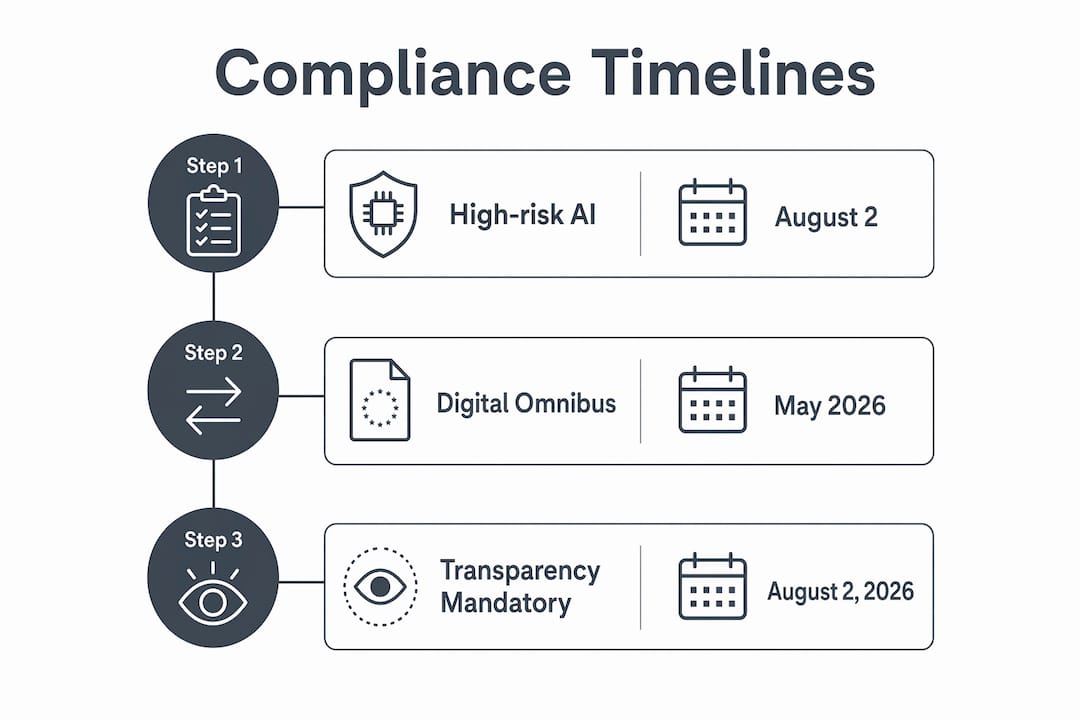
The critical point: transparency disclosure duties remain effective august 2, 2026, regardless of the high-risk system postponements. The delay for high-risk systems reflects institutional unpreparedness across EU Member States, not a softening of regulatory expectations. Firms that interpret the Digital Omnibus as a general compliance holiday are making a serious error.
For financial services firms, this split timeline creates a specific risk. Your AI chatbot, synthetic content generator, or emotion recognition tool faces live enforcement from august 2026. Your broader high-risk AI governance program has more runway, but the transparency layer does not. Compliance teams must treat these as separate workstreams with separate deadlines.
Deadline extensions do not pause enforcement for obligations that remain in effect. Documentation, risk management, and disclosure infrastructure must be operational and auditable by the august 2026 date. Regulators will not accept "we were waiting for the high-risk deadline" as a defense for a missing chatbot disclosure.
What are best practices for meeting AI disclosure requirements in financial firms?
Effective disclosure compliance requires more than legal drafting. It requires integration into product design, workflow, and monitoring. Financial firms that treat disclosure as a trust signal rather than a legal checkbox gain a measurable advantage with both regulators and clients.

The European Commission's draft Guidelines and the Code of Practice serve different but complementary functions. The Code of Practice focuses on Articles 50(2) and 50(4), covering technical marking of synthetic content and deepfakes. The Commission Guidelines cover the full Article 50 scope, including chatbot disclosures and emotion recognition notices. Compliance teams must work from both documents, not just one.
Practical implementation requires attention to timing and placement. Disclosures presented after a user has already engaged with an AI system fail the "first interaction" standard. The disclosure must precede or accompany the first AI-generated output. For a financial advisory chatbot, that means the AI notice appears before the first response, not in a welcome email sent three days later.
Common pitfalls in financial sector implementations include:
- Placing AI disclosures in product manuals or onboarding documents rather than at the point of interaction
- Using vague language such as "automated assistance" instead of clearly stating the system is AI
- Failing to update disclosures when the underlying AI model changes
- Treating synthetic content marking as a metadata-only exercise, invisible to the end user
- Conflating GDPR consent notices with Article 50 disclosures, which have different triggers and standards
Firms that hide disclosures in manuals rather than presenting them at interaction points consistently fail regulatory review. The fix is architectural: disclosure must be a designed feature of the user interface, not an afterthought added by legal.
Monitoring and documentation are equally critical. Compliance teams need a live record of which AI systems are deployed, what disclosures are active, and when those disclosures were last reviewed. Static spreadsheets do not scale when a firm runs dozens of AI agents across trading, client services, and operations. Aetherpulse addresses this gap by building a continuously updated AI agent inventory from OAuth metadata, without touching customer data.
Pro Tip: Treat each Article 50 disclosure as a versioned compliance artifact. When the AI model or its output type changes, the disclosure must be reviewed and updated. Maintain a change log with timestamps for every disclosure revision.
How do disclosure obligations connect to systemic risk and incident reporting?
Article 50 transparency duties sit within a broader framework that extends to General-Purpose AI models and systemic risk. Financial firms adopting large foundation models need to understand where their obligations escalate.
The systemic risk threshold is defined by training compute. Firms need to track four specific obligations once a model crosses that threshold:
- Notification to the European Commission. Providers must notify the Commission within two weeks of exceeding 10^25 FLOPs in training compute. This applies to providers, but financial firms deploying third-party models must confirm their vendor's compliance status.
- Risk assessment. Systemic risk models require documented risk assessments covering potential harms at scale, including financial stability risks relevant to the sector.
- Adversarial testing. Providers must conduct adversarial testing of systemic risk models. Financial firms using these models should request testing results as part of vendor due diligence.
- Serious incident reporting under Article 55. Any serious incident involving a systemic risk model must be reported to the Commission. Financial firms must have incident detection and escalation processes that can identify and route these events within required timeframes.
For most financial services firms, the systemic risk obligations apply indirectly through vendor relationships rather than directly as providers. The practical implication is that your vendor management and third-party risk frameworks must now include AI Act compliance verification. A vendor that fails to notify the Commission of a threshold breach creates downstream compliance exposure for every deployer using that model.
Key Takeaways
AI regulatory disclosure obligations under EU AI Act Article 50 are live from august 2, 2026, and financial firms must treat transparency as a designed compliance feature, not a documentation exercise.
| Point | Details |
|---|---|
| Article 50 is live from august 2026 | Transparency disclosure duties were not delayed by the Digital Omnibus; enforcement applies from the original date. |
| Four distinct disclosure categories | AI interaction, synthetic content, emotion recognition, and deepfake labeling each carry separate compliance triggers. |
| Disclosure placement is legally material | Notices buried in terms or manuals fail the Article 50(5) standard; disclosures must appear at first interaction. |
| Systemic risk adds vendor obligations | Firms using large AI models must verify provider compliance with notification and incident reporting duties. |
| Documentation must be continuous | Static records do not satisfy audit requirements; firms need live, versioned disclosure logs across all AI deployments. |
The compliance gap most firms are not talking about
The firms I see struggling most with AI disclosure compliance are not the ones that ignored the regulation. They are the ones that treated it as a legal drafting exercise and handed it to their documentation team. The result is technically worded notices that no user reads and no regulator will accept as genuine transparency.
The deeper problem is structural. Most financial firms have no real-time inventory of their AI agents. They cannot tell you, on demand, which systems are generating synthetic content today, which disclosures are active, and when those disclosures were last reviewed. That gap is not a legal problem. It is an infrastructure problem. And it will not be solved by adding another policy document.
What I have seen work is treating disclosure as a product requirement from day one. When the compliance function is involved at the design stage, disclosures get built into the interface rather than bolted on afterward. That shift also changes how regulators read your audit evidence. A firm that can produce a timestamped, cryptographically signed record of every disclosure event looks fundamentally different from one presenting a PDF policy dated six months ago.
The extended deadlines for high-risk systems have given some compliance teams a false sense of breathing room. The transparency obligations did not move. If your AI chatbot goes live in september 2026 without a compliant Article 50(1) notice, you are already in breach. The Digital Omnibus bought time for governance frameworks, not for the user-facing disclosures that regulators will check first.
My advice to compliance leaders: build the disclosure infrastructure now, before the deadline, and build it so it generates evidence automatically. The firms that do this will spend less time in regulatory conversations and more time on the work that actually differentiates them.
— Eleye
How Aetherpulse supports AI disclosure compliance
Financial firms need more than policy documents to satisfy AI disclosure obligations. They need live visibility into every AI agent in their environment, with audit-ready evidence that regulators and internal risk functions can rely on.
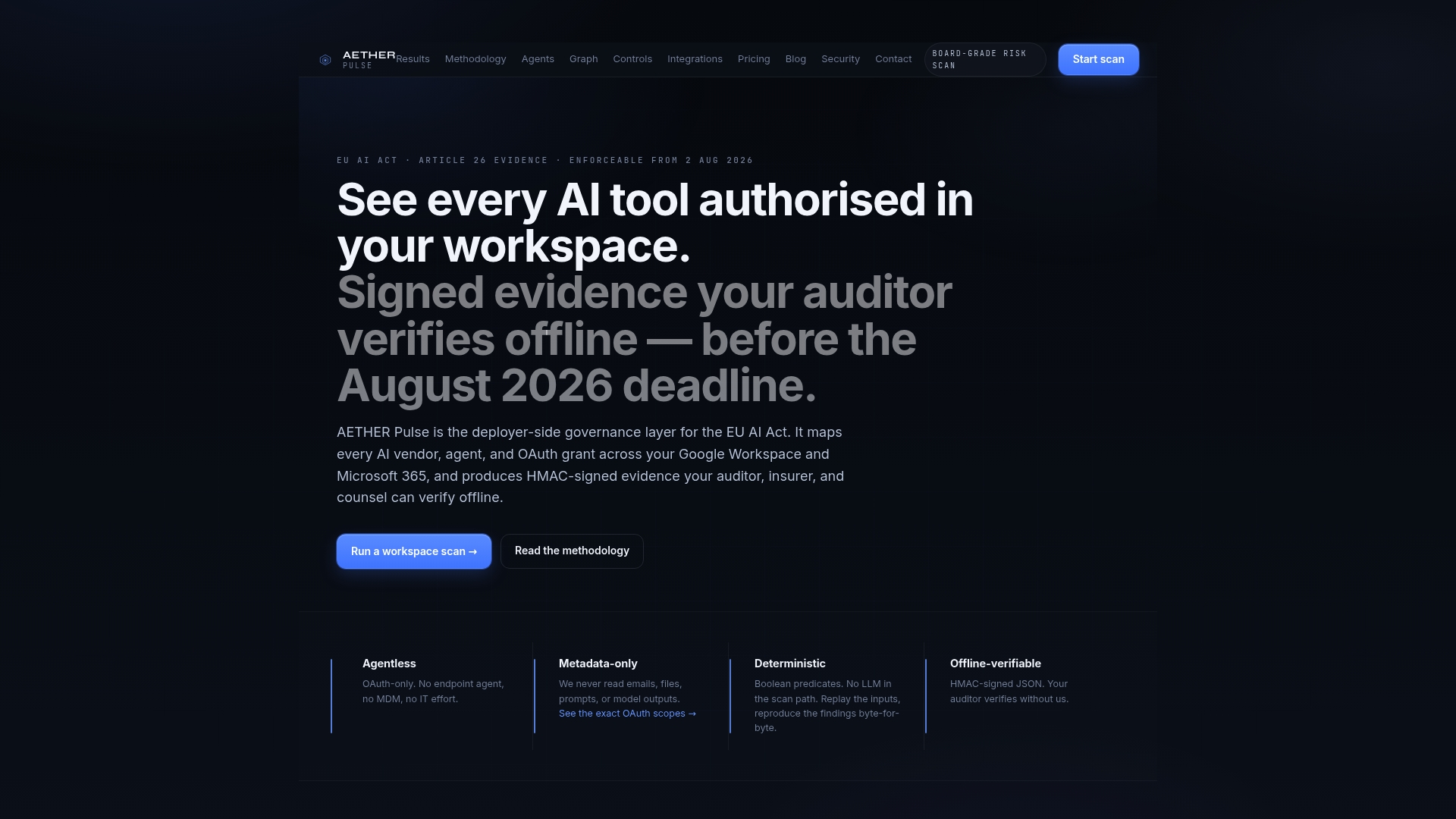
Aetherpulse connects via OAuth metadata only, building a continuously updated inventory and identity graph of your firm's AI agents without accessing customer data. It surfaces which systems trigger Article 50 obligations, tracks disclosure status across deployments, and generates tamper-evident, HMAC-SHA256-signed evidence packs on demand. The platform aligns with EU AI Act Article 26, FCA Consumer Duty, and SYSC requirements, giving compliance teams a single audit layer across the regulatory frameworks that matter most. Explore Aetherpulse to see how it maps directly to your firm's disclosure obligations.
FAQ
What are AI regulatory disclosure obligations?
AI regulatory disclosure obligations are legal duties requiring organizations to inform users when they interact with AI, when content is AI-generated, and when biometric or emotion recognition processing occurs. Under EU AI Act Article 50, these duties apply to both providers and deployers of AI systems.
When do Article 50 transparency obligations take effect?
Article 50 obligations become applicable august 2, 2026. The Digital Omnibus delayed high-risk AI system deadlines but did not change the transparency disclosure effective date.
Do UK financial firms need to comply with EU AI Act disclosure rules?
Yes. Providers established outside the EU, including UK businesses, must comply with Article 50 if their AI system outputs are used by individuals in the EU.
What penalties apply for breaching Article 50 disclosure duties?
Fines for Article 50 breaches reach up to €15 million or 3% of global annual turnover, whichever is higher. Breaches of prohibited AI practices carry higher penalties of up to €35 million or 7% of global turnover.
How does a firm demonstrate compliance with AI disclosure obligations?
Compliance requires documented, versioned records of active disclosures, evidence that notices appear at first user interaction, and audit trails showing when disclosures were reviewed or updated. Static policy documents do not satisfy regulatory audit standards.
Recommended
Working on Article 26 readiness, deployer-side governance evidence, or AI agent risk at a regulated firm? We'd value 15 minutes of your perspective.
Start a conversation